
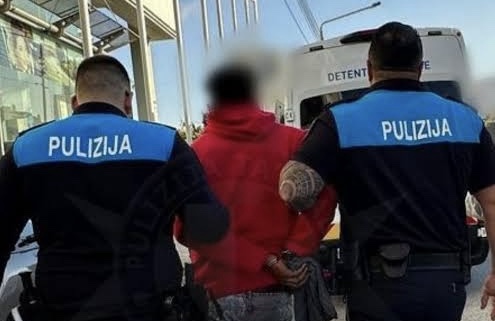
Images matter !!!
A line of handcuffed men flanked by policemen hits you in a way that a dry list of facts rarely does. That is the first thing to say about this Newsbook piece by Jurgen Balzan, on the Gżira arrests. He knows this and leans into it. The result reads less like a routine police brief and more like an argument about how we show power in public.
Balzan opens with the visual and keeps returning to it. It tells you that 32 people were arrested and then moves quickly from the immediate event to a wider critique. The language is sharp and moral. The piece asks you to feel the scene and to see it as part of a pattern. That is a choice. It is a choice to treat the image as evidence, not just illustration.
If one is to expect standard law enforcement reporting, you will notice what is missing. Typical coverage lists who was arrested, why, and what the next steps are. It quotes the Malta Police statement and notes the legal process. This web news article does some of that, but it spends more time on context and on the human cost. It brings in past findings from oversight bodies and frames the operation as a symptom of deeper problems like limited legal pathways and labour vulnerability. That framing moves the piece into advocacy territory.
Is that a problem? Not necessarily. Journalism has many roles. One role is to record events in a neutral way. Another is to press power and to name harm. This article chooses the latter. It wants readers to judge, to feel uncomfortable, to ask why this kind of public display happens. For readers who want moral clarity and urgency, the tone will feel right. For readers who want a fuller procedural account, the piece will feel partial.
There is a risk when reporting leans heavily on imagery and moral language. The police perspective is present but thin. The voices of those arrested do not appear. Independent legal commentary on the specific operation is limited. That selective sourcing strengthens the critique but narrows the frame. It makes the piece easier to read as a moral indictment and harder to read as a balanced account.
From my end, I would not call the article pure sensationalism. Sensationalism aims to shock without grounding. This piece shocks, yes, but it also points to documented concerns about enforcement practices. It treats the visual as part of a pattern rather than as an isolated spectacle. That gives the critique weight. Still, the emphasis on the visual and the moral language means the piece functions more as a call to action than as a neutral record.
The tone can feel militant. Jurgen Balzan adopts an adversarial stance toward enforcement policy and uses language that leaves little room for equivocation. That can be useful. It can also alienate readers who want more detail about the operation itself. If the goal is persuasion among those already sympathetic, the tone works. If the goal is to reach a broader audience, the piece could gain by widening its sourcing and adding procedural detail.
And context matters here. Public displays of arrested migrants are common in many places. Police forces everywhere sometimes use images of arrests as public messaging. In some countries those images are routine. In others they spark legal challenges and public debate. Where oversight bodies have raised concerns, critical reporting tends to frame such operations as part of a pattern. This Newsbook piece by Balzan follows that pattern by linking the arrests to prior findings and to structural issues. That is a defensible editorial stance.
If he wanted to keep the critical edge while making the piece harder to dismiss, a few changes would help. Add more detail about the legal basis for the operation and the police objectives. Include voices from those detained or their legal representatives. Bring in independent legal experts to comment on whether safeguards were followed. Offer comparative data on similar operations and their outcomes. Those additions would not soften the argument. They would make it more robust.
Also, I think nuance matters when the stakes are human dignity and legal rights. I also think urgency matters when oversight bodies have already raised alarms. The article chooses urgency and moral clarity. That is a legitimate choice. It is not the only one, and it is not neutral. If we want journalism that pushes for change, this piece will feel familiar and necessary. If, then, we want journalism that leaves the moral judgment to the reader, you will want more procedural detail and a wider range of voices.
All that leaves a simple question: do we want reporting that takes a clear moral stance and asks readers to act, or do we want reporting that lays out every procedural fact and lets readers decide? Both approaches shape public response in different ways, and both matter.
Balzan’s article on the NewsBook web news portal is not mere spectacle. It is advocacy journalism with a sharp edge. It chooses to humanise some parts of the story and to omit others.
That choice is deliberate and it matters.
#MigrationPolicy #PressEthics #HumanRights #Malta #PoliceAccountability


 The Cons's Nook: www.ivanmconsiglio.com