
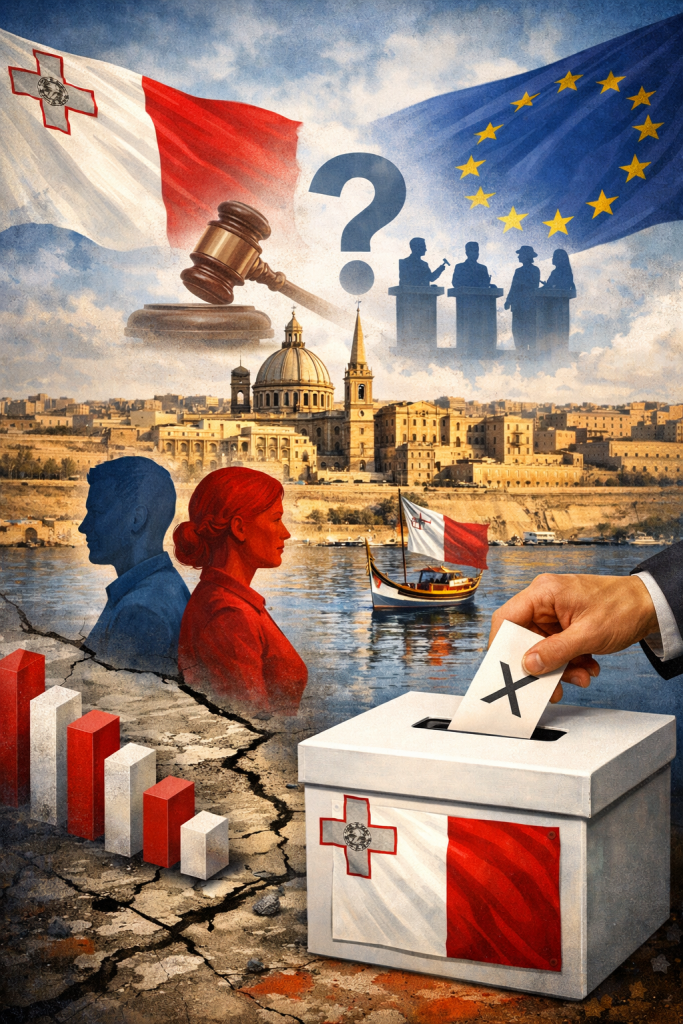
A snap election announced in a short, sharp burst can feel like a small earthquake. It shakes up routines, forces quick choices, and leaves people asking what really prompted the move.
The Maltese government’s explanation is straightforward. It says there is an unusual international situation, especially around energy markets, and that a fresh mandate would let leaders act without delay. It points to a fiscal buffer set aside to protect households and businesses and frames the timing as a way to secure continuity while risks are still manageable.
At the same time, the timing looks tactical. Calling the shortest legal campaign narrows the window for debate and reduces the chance that shifting events will change public opinion. That is a familiar play in many democracies. It might be a prudent step to lock in policy continuity. It might also be a way to limit scrutiny. Both readings sit next to each other and neither fully cancels the other.
What seems to matter most for Malta’s reputation abroad is how the story unfolds over the next few weeks. If the campaign focuses on clear, concrete plans for energy resilience and fiscal clarity, international partners and investors could see a government acting with purpose. If the campaign becomes dominated by partisan attacks or fresh governance concerns, outside observers could read it as a sign of political fragility.
There are practical things to watch that will shape that outside view. Look for detailed policy proposals tied to the announced fiscal measures. Watch whether polling moves during the short campaign. Pay attention to statements from regional partners and financial commentators. Those signals will tell you whether the move reassures or unsettles markets and diplomats.
Many like myself will find it helpful to think of this as a test of narrative control. The Labour government has offered a reason that is plausible. The Nationalist opposition and critics have a counter story that is also plausible. Which story gains traction will depend on evidence, tone, and the degree of transparency shown in the campaign.
We might feel impatient with the speed of it all. That is understandable. Short campaigns compress public debate and make it harder for voters to dig into detail. At the same time, a quick vote can reduce uncertainty if the alternative is prolonged political drift. Which outcome anybody prefers may depend on how much trust we place in the actors involved.
One modest takeaway would be to treat the announcement as a signal, not a verdict. Look for substance behind the rhetoric. Ask whether the measures promised are specific and measurable. Notice whether the campaign invites scrutiny or avoids it. Those are the practical cues that will tell us whether this early call was a responsible move or a political shortcut.
We’ll be all watching how the campaign frames the energy measures and how international commentators respond. For now, the move is neither clearly wise nor clearly cynical. It sits in that uneasy middle ground where context and follow through will decide the story.


