Here’s a video by Imperial War Museums titled “From 1914 to Now: British Army Camouflage Explained.” It’s a straight historical explainer: James Taylor, one of their curators, walks through how British Army camouflage evolved from pre‑WWI uniforms all the way to modern Multi‑Terrain Pattern and future concepts.
https://youtu.be/7X9RyGubtjM?si=RAzW6YUCD_FMOyj0
Camouflage in the British Army has never been about fashion. It’s always been a reaction to whatever was killing soldiers at the time. Before 1914, bright colours made sense because battles were slow, smoky, and close. You needed to see your own men. Once rifles reached out hundreds of metres and machine guns punished anything that moved, visibility became a liability. Khaki wasn’t a style choice; it was survival.
WWI turned the whole thing into a science. Mud, smoke, artillery, snipers — the battlefield swallowed colour. Uniforms dulled down, and the idea of “disrupting shape” took hold. Not just blending in, but breaking up the human outline. Camouflage units appeared, mixing art with tactics. You can almost picture the early attempts: painters, engineers, and officers arguing over how to hide a gun position from a German observer with binoculars.
By WWII, the British had moved from theory to practice. Brush‑stroke patterns, desert schemes for North Africa, special kit for commandos and airborne troops. Each theatre demanded its own answer. Europe needed greens and browns. The desert needed sand and shadow. Camouflage became a language spoken differently depending on where you were fighting.
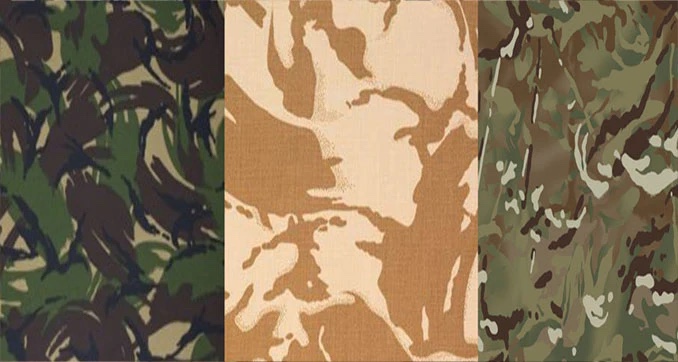
Then came the Cold War and the classic DPM — the pattern most people still associate with the British soldier. Temperate for Europe, desert for the Gulf. Two wardrobes, two worlds. It worked well enough, but it tied you to a single environment. If you stepped outside that environment, you stood out.
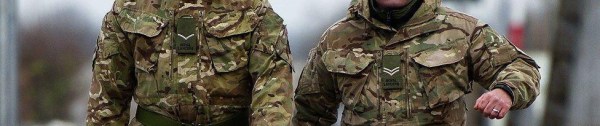
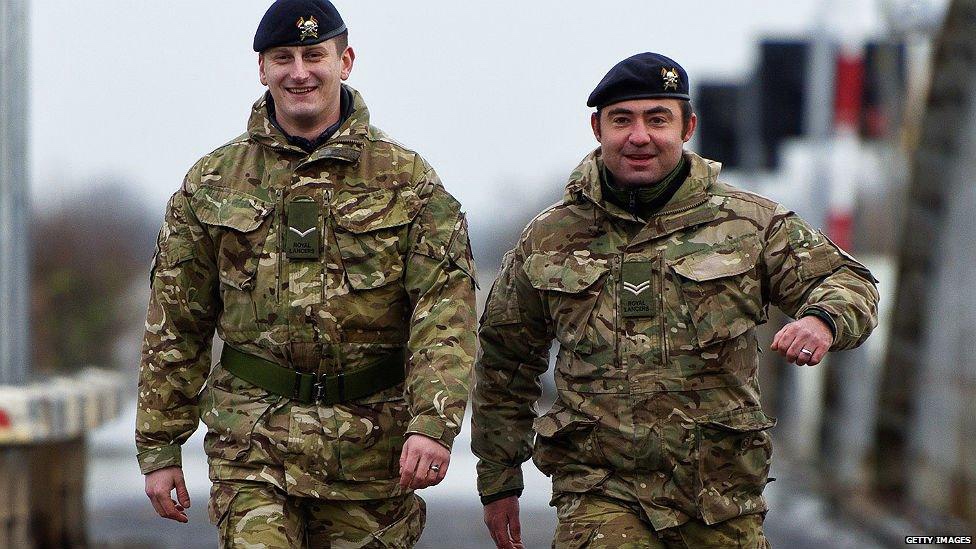
Iraq and Afghanistan exposed that weakness. One patrol could take you from green irrigation belts to rock to dust to broken urban ground. A single‑terrain pattern wasn’t enough. That’s how Multi‑Terrain Pattern arrived — something that didn’t try to be perfect anywhere, but good enough everywhere. A compromise born from hard lessons.
Today the conversation has shifted again. It’s no longer just about the human eye. Drones, sensors, thermal imagers — the battlefield sees in wavelengths we never had to worry about before. The future of camouflage is multispectral, adaptive, and technical. Less paint on fabric, more material science and signature management. The soldier isn’t just hiding from a man with binoculars anymore; he’s hiding from a machine that never blinks.
That’s the arc: from parade colours to physics. From being seen to being invisible. And every shift tells you something about the threats of that era.
#BritishArmy #Camouflage #MilitaryHistory #UniformEvolution #Khaki #DPM #MTP #WWI #WWII #ColdWar #ModernWarfare #SignatureManagement #Multispectral #Tactics #Fieldcraft #Infantry #Veterans #Malta #MediterraneanDefence #MilitaryCulture #OperationalLessons #TerrainAdaptation #CombatEngineering #Deception #HistoricalContext #DefenceStudies #MilitaryTechnology #BattlefieldSurvivability #AdaptiveCamouflage #SoldierSystems


